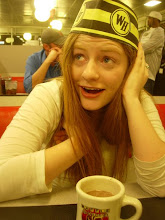
I made it!
Yesterday, I arrived in Vegas at around noon. None of the other P5s crew was in yet, so I hung around our house (which is very nice) for a while until Court showed up in town. I met him over at the Rio and got to look around and get a feel for the place. It was kinda weird finally seeing what it looks like in person versus just seeing it on TV all these years.
When some of the other guys got here, we headed back over to the Rio again and this time I spotted one of the dealers from Caesars Indiana, Adam. I think I may have scared the crap out of him (granted, I did just scream "Adam" at him down a rather long hallway), but it was nice to see a familiar face here. The rest of the P5s crew seems very nice, but I get the impression a couple of them already have a bunch of friends out here, so I appreciate having people to talk to and hang out with besides the housemates.
I am trying to decide if/what to play. The bankroll is...er....minimal to say the least, but I can't help but want to play while I can. I am thinking if I can find a 5/10 limit game, I would like to give it a shot, but I have also been playing more 1/2 as of late. More than likely I will start in the limit comfort zone, but I am really hoping to improve my NL game over the next few weeks.
Not much else to report on considering we just arrived yesterday. Just happy to be here.
Thursday, May 29, 2008

Wednesday, May 21, 2008
A lil unusual
Check this hand that happened in my Sit n Go tonight:
PokerStars Game #17603506192: Tournament #89253116, $6.00+$0.50 Hold'em No Limit - Level II (15/30) - 2008/05/22 - 01:36:53 (ET)
Table '89253116 1' 9-max
Seat #7 is the button
Seat 1: toddw8 (1440 in chips)
Seat 2: uscjess (1330 in chips)
Seat 3: BerzWay (1990 in chips)
Seat 4: thecomet44 (1800 in chips)
Seat 5: selfd (1610 in chips)
Seat 6: marilynjoy (1350 in chips)
Seat 7: Eman299 (1465 in chips)
Seat 8: bazza68 (1205 in chips)
Seat 9: CINACIN (1310 in chips)
bazza68: posts small blind 15
CINACIN: posts big blind 30
** HOLE CARDS ***
Dealt to uscjess [Kd Ks]
toddw8: folds
uscjess: raises 60 to 90
BerzWay: folds
thecomet44: folds
selfd: folds
marilynjoy: folds
Eman299: folds
bazza68: raises 1115 to 1205 and is all-in
CINACIN: raises 105 to 1310 and is all-in
uscjess: calls 1220
*** FLOP *** [Kc Jd Qc]
*** TURN *** [Kc Jd Qc] [9h]
CINACIN said, "no way"
*** RIVER *** [Kc Jd Qc 9h] [6c]
*** SHOW DOWN ***
CINACIN: shows [Qd Qh] (three of a kind, Queens)
uscjess: shows [Kd Ks] (three of a kind, Kings)
BerzWay said, "WHAT"
uscjess collected 210 from side pot
bazza68: shows [Js Jh] (three of a kind, Jacks)
bazza68 said, "lol"
uscjess collected 3615 from main pot
*** SUMMARY ***
Total pot 3825 Main pot 3615. Side pot 210. Rake 0 Board [Kc Jd Qc 9h 6c]
Seat 1: toddw8 folded before Flop (didn't bet)
Seat 2: uscjess showed [Kd Ks] and won (3825) with three of a kind, Kings
Seat 3: BerzWay folded before Flop (didn't bet)
Seat 4: thecomet44 folded before Flop (didn't bet)
Seat 5: selfd folded before Flop (didn't bet)
Seat 6: marilynjoy folded before Flop (didn't bet)
Seat 7: Eman299 (button) folded before Flop (didn't bet)
Seat 8: bazza68 (small blind) showed [Js Jh] and lost with three of a kind, Jacks
Seat 9: CINACIN (big blind) showed [Qd Qh] and lost with three of a kind, Queens
Glad it all worked out for me : )
Current balance: 1055
PokerStars Game #17603506192: Tournament #89253116, $6.00+$0.50 Hold'em No Limit - Level II (15/30) - 2008/05/22 - 01:36:53 (ET)
Table '89253116 1' 9-max
Seat #7 is the button
Seat 1: toddw8 (1440 in chips)
Seat 2: uscjess (1330 in chips)
Seat 3: BerzWay (1990 in chips)
Seat 4: thecomet44 (1800 in chips)
Seat 5: selfd (1610 in chips)
Seat 6: marilynjoy (1350 in chips)
Seat 7: Eman299 (1465 in chips)
Seat 8: bazza68 (1205 in chips)
Seat 9: CINACIN (1310 in chips)
bazza68: posts small blind 15
CINACIN: posts big blind 30
** HOLE CARDS ***
Dealt to uscjess [Kd Ks]
toddw8: folds
uscjess: raises 60 to 90
BerzWay: folds
thecomet44: folds
selfd: folds
marilynjoy: folds
Eman299: folds
bazza68: raises 1115 to 1205 and is all-in
CINACIN: raises 105 to 1310 and is all-in
uscjess: calls 1220
*** FLOP *** [Kc Jd Qc]
*** TURN *** [Kc Jd Qc] [9h]
CINACIN said, "no way"
*** RIVER *** [Kc Jd Qc 9h] [6c]
*** SHOW DOWN ***
CINACIN: shows [Qd Qh] (three of a kind, Queens)
uscjess: shows [Kd Ks] (three of a kind, Kings)
BerzWay said, "WHAT"
uscjess collected 210 from side pot
bazza68: shows [Js Jh] (three of a kind, Jacks)
bazza68 said, "lol"
uscjess collected 3615 from main pot
*** SUMMARY ***
Total pot 3825 Main pot 3615. Side pot 210. Rake 0 Board [Kc Jd Qc 9h 6c]
Seat 1: toddw8 folded before Flop (didn't bet)
Seat 2: uscjess showed [Kd Ks] and won (3825) with three of a kind, Kings
Seat 3: BerzWay folded before Flop (didn't bet)
Seat 4: thecomet44 folded before Flop (didn't bet)
Seat 5: selfd folded before Flop (didn't bet)
Seat 6: marilynjoy folded before Flop (didn't bet)
Seat 7: Eman299 (button) folded before Flop (didn't bet)
Seat 8: bazza68 (small blind) showed [Js Jh] and lost with three of a kind, Jacks
Seat 9: CINACIN (big blind) showed [Qd Qh] and lost with three of a kind, Queens
Glad it all worked out for me : )
Current balance: 1055
Tuesday, May 13, 2008
I Enjoy Being a Girl
I was up at the boat yesterday putting my governmental money to good use. There was hardly anyone there, so I was forced to sit down at one of the two $1/$2 NL tables. Man, did I get stuck at the wrong one. There were two guys, both very drunk, who were basically getting it all in every hand. Each had around $1000 in front of them compared to my paltry $200. The one bright spot was that I was seated to the immediate left of them, meaning they had to act before I made any decisions. Well, my very first hand I pick up queens and raise to $10. The first drunk guy reraises me and every fiber of my being says "shove all in", but I, being a big wimp, elect to call instead. The flop is K 8 3 rainbow. He bets. Again, every fiber says shove, I fold. I know I know, I play like a shameful little girl, but I just HATE going broke on the first hand. And, as I had just seen, this guy was calling any and everything. Considering how bad I was running, I didn't even want to take them up against just an ace. He showed AJ, smirked like he was some big shot, and went broke a couple of hours later. So did the second drunk guy, who I picked up about a hundred bucks off of.
After the two drunk guys busted out, the table calmed down and I proceeded to sit there for an hour and a half folding all my crap hands. I got nothing to work with. The big stack at the table is a guy I have played with a few times (I think his name is Scott...we'll go with that). He raises to $25. This may seem like a lot, but that is generally his standard raise. He is a fairly tight player, but his range on opening in early-middle position here is probably 77+ and KJs+. I have QQ again. Yee haw, I think to myself. I then pop it up to $75. It fold around to him and he looks disgusted. He asks how much I have total, which is $143 in addition to the $75. He then says, "I hate to do it, but I guess I go all in. I mean, there's only one hand that beats me."
Oh crap.
I ask, "only one, huh?" and he nods his head. I don't think he' s lying either, so I tell him there are two hands that beat me and fold my queens face up. He shows the kings. Bummer.
Well, later, he raises to $20 and I am in the big blind with 10 10 and I elect to flat call and avoid a situation like last time. It is just him and I in the hand and he asks if I have a pair. I say I do, he tells me he has one as well. The flop comes out and it is 8 high. I inform him my pair is bigger than the board and he is like, "I flopped a set." Seriously? I check, he puts me all in, I fold, he shows 88. At this point, all of the other guys at the table are like, "Woah man you are WAY too nice." He says, "come on man, I don't want to take all her money, we're friends, it is fine." Granted, this guy and I don't technically know each other's names, but I appreciate the kindness nonetheless. Later, my friend insisted this was not some good samaritan, but just a dude with a crush.
This has gotten me thinking. I mean, to be perfectly honest, I suppose it crossed my mind that being the only female under 30 in the room went into this guy's decision making process. That being said, if that is the case, honestly, I don't feel bad about it. First of all, I am not in the poker room, whoring myself out to get guys to be nice to me. I sit at the table, I am personable and, anyone who knows my personality realizes I am just friendly in general. Secondly, I have to sit at tables with so many disgusting, mysoginistic men who HATE to be beat by a girl that it seems only fair I get some advantages being a female as well. Finally, this is a game where everyone is developing some sort of table image and what is going on in this situation is more of the same. I have established a reputation as a solid player who is also kinda fun to have at the table. As a result, I get respect from the regulars when I raise and people who are in marginal situations stay away from me sometimes.
So, I don't care if he thought I was cute because I am secure enough in my card playing skills to realize if I didn't know how to play cards, I probably wouldn't get that kind of treatment at all.
Oh, and current balance: 997.14
After the two drunk guys busted out, the table calmed down and I proceeded to sit there for an hour and a half folding all my crap hands. I got nothing to work with. The big stack at the table is a guy I have played with a few times (I think his name is Scott...we'll go with that). He raises to $25. This may seem like a lot, but that is generally his standard raise. He is a fairly tight player, but his range on opening in early-middle position here is probably 77+ and KJs+. I have QQ again. Yee haw, I think to myself. I then pop it up to $75. It fold around to him and he looks disgusted. He asks how much I have total, which is $143 in addition to the $75. He then says, "I hate to do it, but I guess I go all in. I mean, there's only one hand that beats me."
Oh crap.
I ask, "only one, huh?" and he nods his head. I don't think he' s lying either, so I tell him there are two hands that beat me and fold my queens face up. He shows the kings. Bummer.
Well, later, he raises to $20 and I am in the big blind with 10 10 and I elect to flat call and avoid a situation like last time. It is just him and I in the hand and he asks if I have a pair. I say I do, he tells me he has one as well. The flop comes out and it is 8 high. I inform him my pair is bigger than the board and he is like, "I flopped a set." Seriously? I check, he puts me all in, I fold, he shows 88. At this point, all of the other guys at the table are like, "Woah man you are WAY too nice." He says, "come on man, I don't want to take all her money, we're friends, it is fine." Granted, this guy and I don't technically know each other's names, but I appreciate the kindness nonetheless. Later, my friend insisted this was not some good samaritan, but just a dude with a crush.
This has gotten me thinking. I mean, to be perfectly honest, I suppose it crossed my mind that being the only female under 30 in the room went into this guy's decision making process. That being said, if that is the case, honestly, I don't feel bad about it. First of all, I am not in the poker room, whoring myself out to get guys to be nice to me. I sit at the table, I am personable and, anyone who knows my personality realizes I am just friendly in general. Secondly, I have to sit at tables with so many disgusting, mysoginistic men who HATE to be beat by a girl that it seems only fair I get some advantages being a female as well. Finally, this is a game where everyone is developing some sort of table image and what is going on in this situation is more of the same. I have established a reputation as a solid player who is also kinda fun to have at the table. As a result, I get respect from the regulars when I raise and people who are in marginal situations stay away from me sometimes.
So, I don't care if he thought I was cute because I am secure enough in my card playing skills to realize if I didn't know how to play cards, I probably wouldn't get that kind of treatment at all.
Oh, and current balance: 997.14
Wishing things would turn around...
current balance.....
974
I won't bitch about running bad, but.....you know, I'm running bad. Same ole same ole.
974
I won't bitch about running bad, but.....you know, I'm running bad. Same ole same ole.
Monday, May 12, 2008
Poker Paper Part Four--Live Free and Die Nerd
Even when a person is not participating in a poker game, their performance within the poker room works to establish their position as someone with skill and knowledge. Moving now to the third category of metacommunication which occurs outside of the game itself, my attention will also shift from how people disseminate information to how they go about obtaining it. In such a highly competitive environment, players must earn their right to be privy to certain types of information. Players may be unwilling to tap the glass and educate the fish, but if a person has proven themselves to be competent on their own accord, it is much more likely that others will discuss game strategy with them. Within my time in the field, I found players were reticent to speak with me for fear I was trying to obtain “trade secrets” they had spent years developing. It was only after demonstrating my own knowledge of the game through references to poker jargon or establishing a personal connection through a common interest outside of poker, that they became more open in their conversations.
One person I spoke with at length actually has been a poker mentor of sorts for me long before I began my fieldwork. I inquired as to why he and his friends took me under their wing and educated me about the game. He explained in our first time playing together in a poker tournament, the field of other players was unusually weak. We were briefly put on the same table and he observed that I was one of the few players there who had an understanding of how the game worked. Additionally, my style of play reminded him of when he first took up an interest in the game and, through that identification, a bond was established. Within Caesars, personal friendships and relationships are often more loosely defined. When asked, one person noted they almost always know someone within the room when they show up to play, but often times “knowing” someone extends only to facial recognition and a few mental notes about how they play or their behavior at the table. It is only after months of playing together and through the development of mutual respect that interaction away from the table escalates from perfunctory greetings to lengthier informal conversation.
Discussions about how to approach the game are less common and typically conducted away from the table. Some players like to replay key hands from a session with their most trusted peers to facilitate advice and feedback on how to improve their game while others do not even discuss game theory, save for recalling the action of a hand for an inquisitive player, within the confines of the casino. The players I spoke with dismissed notions of mentoring and discussing their approach to the game with their peers, but oftentimes our interviews were disrupted by another player who came by to say hello. When my interview subject would ask how they were, the players would frequently recall either a big hand they lost or a big hand they won. The retelling of the single hand stood in metonymically for their entire session, indicating to us they were either ahead several hundred dollars or had gotten in some unfortunate or unlucky situations resulting in a financial setback. Players almost never claimed they played a hand badly. Much in the same way players attempt to predict what their opponent holds at the table, their recollection of the hand also includes critique of how poorly the other person played their hand. These retellings of losing hands, called bad beat stories, are perceived as means to vent frustration, but they also reaffirm the narrator’s status as a player of skill to someone who was not there to witness their performance.
In general, players do not like to discuss the larger scope of their financial situations. While they were willing to disclose how much they won or lost in a single session, they remained protective of just how much money they were actually making in a given year. When I asked one player what made him so well suited for poker, he responded by noting his ability to handle the emotional swings of financial losses and gains within the game because he was able to contextualize them within his lifetime earnings. This type of understanding, while not direct metacommunication, still alludes to a successful players’ ability to consider their own position within the greater schemes of the game, the room, and their career respectively. Furthermore, by withholding information about their life outside of poker or the amount of money they have won over the course of a long period of time, they retain more authority in how they are perceived by the poker community. Players I interviewed highlighted their experience and knowledge of the history of the game in order to garner my respect. Often, after interviews were over, other players would take me aside and inform me the person I had spoken with was broke three months earlier or tell me about bad plays they had made in the past to illustrate how I should take what they say with a grain of salt. One man simply cautioned me that the majority of what is said in a casino is some manipulation of the truth and there is no one who is going to be completely straightforward with me. However, shortly after this warning, he also offered to peruse my research in order to point out what is true and what is false.
Questions of authority aside, what the man’s remark reiterates is the game of poker is designed to make sure nothing is as it seems. An old saying amongst poker fans is, “the man who invented poker was clever, but the man who invented chips was a genius”. At the heart of poker interaction is an exchange of goods, but even that is masqueraded through the implementation of the medium of chips. By substituting actual money with only a representation of it, players become detached from its value outside of the casino and instead use it as a tool within their performance. For regular players, this disregard for money is often noted as a key to their success. Their fearlessness as a card player is bolstered by their ability to risk several hundred dollars on a bluff even though they know there is a chance they won’t get that money back. Conversely, their ability to distract other players from the pressures of the world outside the casino doors affords them ample opportunities to capitalize on their opponent’s careless mistakes.
Poker play is a highly specialized mode of performance, but it is a great venue to see the ways in which metacommunication can be used not only to amplify the communicative competence of a speech event, but also provide insights into ways highly reflexive forms of communication is enacted by people to mask or detract attention from the heart of the “primary” elements of a given performance. So often, discussions of metacommunication are focused on how it draws audience attention to the performance itself. The fieldwork of Berger and Del Negro conducted at Ohio concert venues and in Italian villages respectively, have shown some of the ways in which reflexive language has influenced aesthetics through drawing attention to the heightened engagement between performer and audience.[i] What I hope my research amongst card players has shown is how reflexive language and nonverbal metacommunicative behavior work to manipulate the narrative message between performer and audience. The performer’s metacommunication displays a thorough understanding of their subject positioning within the performance, but does not always impart this understanding to their audience. In a game in which players are constantly avoiding “tapping the glass”, metacommunicative behavior within performance aids in concealing the multiple levels of thought the performer is operating within.
In Karin Barber’s “Preliminary Notes on African Audiences”, she references the multiple ways in which audiences are constructed based on factors such as history and social understanding.[ii] Reflecting back on the levels of metagame a player considers, they help to accommodate the need for poker performer’s to adapt their performance based on their audience. A player operating on level five has considered what level of thinking their opponent is utilizing and adjusts accordingly. For the fish, who are only thinking on the first and second level, a performer’s metacommunicative behavior is purposefully designed to be misinterpreted by their audience in order to achieve fiscal success and gain notoriety as a competent player. Against players who are equally adept, these ever-escalating levels of thought behind metacommunication provide insight into the multi-layered possibilities of reflexive language to influence the aesthetics of a given performance as well as a variation in the ability of the audience to interpret that reflexive language in a particular way. Much in the same way the speech event itself can be dissected into an array of dimensions, metacommunication cannot be described as a single mode of heightened self-awareness, but a fluid range of possibilities that are in need of further exploration and research.
[i] Ibid p.85
[ii] Barber, Karin. 1997. “Preliminary Notes on Audiences in Africa.” Africa 67(3):347-362. p.348
One person I spoke with at length actually has been a poker mentor of sorts for me long before I began my fieldwork. I inquired as to why he and his friends took me under their wing and educated me about the game. He explained in our first time playing together in a poker tournament, the field of other players was unusually weak. We were briefly put on the same table and he observed that I was one of the few players there who had an understanding of how the game worked. Additionally, my style of play reminded him of when he first took up an interest in the game and, through that identification, a bond was established. Within Caesars, personal friendships and relationships are often more loosely defined. When asked, one person noted they almost always know someone within the room when they show up to play, but often times “knowing” someone extends only to facial recognition and a few mental notes about how they play or their behavior at the table. It is only after months of playing together and through the development of mutual respect that interaction away from the table escalates from perfunctory greetings to lengthier informal conversation.
Discussions about how to approach the game are less common and typically conducted away from the table. Some players like to replay key hands from a session with their most trusted peers to facilitate advice and feedback on how to improve their game while others do not even discuss game theory, save for recalling the action of a hand for an inquisitive player, within the confines of the casino. The players I spoke with dismissed notions of mentoring and discussing their approach to the game with their peers, but oftentimes our interviews were disrupted by another player who came by to say hello. When my interview subject would ask how they were, the players would frequently recall either a big hand they lost or a big hand they won. The retelling of the single hand stood in metonymically for their entire session, indicating to us they were either ahead several hundred dollars or had gotten in some unfortunate or unlucky situations resulting in a financial setback. Players almost never claimed they played a hand badly. Much in the same way players attempt to predict what their opponent holds at the table, their recollection of the hand also includes critique of how poorly the other person played their hand. These retellings of losing hands, called bad beat stories, are perceived as means to vent frustration, but they also reaffirm the narrator’s status as a player of skill to someone who was not there to witness their performance.
In general, players do not like to discuss the larger scope of their financial situations. While they were willing to disclose how much they won or lost in a single session, they remained protective of just how much money they were actually making in a given year. When I asked one player what made him so well suited for poker, he responded by noting his ability to handle the emotional swings of financial losses and gains within the game because he was able to contextualize them within his lifetime earnings. This type of understanding, while not direct metacommunication, still alludes to a successful players’ ability to consider their own position within the greater schemes of the game, the room, and their career respectively. Furthermore, by withholding information about their life outside of poker or the amount of money they have won over the course of a long period of time, they retain more authority in how they are perceived by the poker community. Players I interviewed highlighted their experience and knowledge of the history of the game in order to garner my respect. Often, after interviews were over, other players would take me aside and inform me the person I had spoken with was broke three months earlier or tell me about bad plays they had made in the past to illustrate how I should take what they say with a grain of salt. One man simply cautioned me that the majority of what is said in a casino is some manipulation of the truth and there is no one who is going to be completely straightforward with me. However, shortly after this warning, he also offered to peruse my research in order to point out what is true and what is false.
Questions of authority aside, what the man’s remark reiterates is the game of poker is designed to make sure nothing is as it seems. An old saying amongst poker fans is, “the man who invented poker was clever, but the man who invented chips was a genius”. At the heart of poker interaction is an exchange of goods, but even that is masqueraded through the implementation of the medium of chips. By substituting actual money with only a representation of it, players become detached from its value outside of the casino and instead use it as a tool within their performance. For regular players, this disregard for money is often noted as a key to their success. Their fearlessness as a card player is bolstered by their ability to risk several hundred dollars on a bluff even though they know there is a chance they won’t get that money back. Conversely, their ability to distract other players from the pressures of the world outside the casino doors affords them ample opportunities to capitalize on their opponent’s careless mistakes.
Poker play is a highly specialized mode of performance, but it is a great venue to see the ways in which metacommunication can be used not only to amplify the communicative competence of a speech event, but also provide insights into ways highly reflexive forms of communication is enacted by people to mask or detract attention from the heart of the “primary” elements of a given performance. So often, discussions of metacommunication are focused on how it draws audience attention to the performance itself. The fieldwork of Berger and Del Negro conducted at Ohio concert venues and in Italian villages respectively, have shown some of the ways in which reflexive language has influenced aesthetics through drawing attention to the heightened engagement between performer and audience.[i] What I hope my research amongst card players has shown is how reflexive language and nonverbal metacommunicative behavior work to manipulate the narrative message between performer and audience. The performer’s metacommunication displays a thorough understanding of their subject positioning within the performance, but does not always impart this understanding to their audience. In a game in which players are constantly avoiding “tapping the glass”, metacommunicative behavior within performance aids in concealing the multiple levels of thought the performer is operating within.
In Karin Barber’s “Preliminary Notes on African Audiences”, she references the multiple ways in which audiences are constructed based on factors such as history and social understanding.[ii] Reflecting back on the levels of metagame a player considers, they help to accommodate the need for poker performer’s to adapt their performance based on their audience. A player operating on level five has considered what level of thinking their opponent is utilizing and adjusts accordingly. For the fish, who are only thinking on the first and second level, a performer’s metacommunicative behavior is purposefully designed to be misinterpreted by their audience in order to achieve fiscal success and gain notoriety as a competent player. Against players who are equally adept, these ever-escalating levels of thought behind metacommunication provide insight into the multi-layered possibilities of reflexive language to influence the aesthetics of a given performance as well as a variation in the ability of the audience to interpret that reflexive language in a particular way. Much in the same way the speech event itself can be dissected into an array of dimensions, metacommunication cannot be described as a single mode of heightened self-awareness, but a fluid range of possibilities that are in need of further exploration and research.
[i] Ibid p.85
[ii] Barber, Karin. 1997. “Preliminary Notes on Audiences in Africa.” Africa 67(3):347-362. p.348
Sunday, May 11, 2008
Poker Paper Part Three--Nerd Hard with a Vengeance
Poker players, on the other hand, use their ability to manipulate their subjective metacommentary in order to garner respect and winnings from their opponents. While I have already established some of the parameters and limits set on what people can and cannot say and do when they play poker, let us move now to examining how players work within these confines to influence the aesthetics of their own poker interactions. Players even have a term to describe such behavior: building a table image. In some instances, this image is based on the way they are playing in the course of a single session, but amongst regular players, months and even years of tendencies and performances influence their reputation at the table. Players are able to construct their table image in a number of ways, including the cards they choose to play, how many hands they fold, how frequently they call raises, and how much money they have in front of them.
Oftentimes though, these factors are secondary or are at least masked in part through players’ metacommunicative behavior. One evening, one of my informants and I were observing a particularly raucous $1/$2 NLHE table where one of the more outgoing regulars was seated. Every time the player sits down at a table, he passes out peppermints to the other players as well as the dealer, earning him the nickname of “The Candyman”. In addition to sweetening his opponents’ opinion of him, The Candyman often talks conversationally to other players at the table. On this particular evening, one of the other players was clearly intoxicated and playing a wide range of hands, also known as playing very loosely. While some pros and regulars employ a loose style, poker strategists like Dan Harrington generally perceive this style of play to be a losing one, especially for an inexperienced player.[i] The Candyman was frequently straddling hands, meaning he raised before being dealt cards. The straddle bet, which is a common tactic amongst Caesars Indiana players allows the blind raiser to be the last one to make a decision before the three community cards, known as the flop, are dealt. In addition to the luxury of being the last to act, straddle bets also add money to the pots and are considered to induce more action amongst players. Moreover, players who straddle bet are perceived to be looser players. When I inquired as to why The Candyman would straddle bet so often, my informant explained it helped to build his table image as a loose player even though, in reality, he was playing rather conservatively. By straddling for $5, a mere $3 more than the $2 forced bet, The Candyman was purchasing the table image as someone playing less than stellar cards, making it more likely that someone would call his bets with marginal holdings. In addition to his straddle bet, he was also verbally enticing the drunk player to play, telling him “come on in”, or “raise, come on, raise”. It should also be noted that The Candyman kept a small sign in front of his chip stack which read, “Have you ever noticed that ‘what the hell’ always seems to be the right answer?”
Everything, from the way he dressed to what he said to cultivated a table image that was in direct contrast to the way he was actually playing. In the period of time I watched him, he frequently folded and during one hand showed his opponent his hole cards of two queens before folding when a second jack appeared amongst the community cards, making it possible, if not likely, his opponent held three of a kind. While the case of The Candyman is a unique example, it does speak to the very nature of poker, which is that the way you communicate with others is designed to mask what you are actually doing. The act of bluffing is a great example of how metacommunication is used to adjust the way an opponent interprets the meaning of a performance. When asked what makes a good bluff, one player explained that, “ it tells a good story”. More specifically, bluffs tend to be more effective in inducing an opponent to fold when the player’s actions mirror those a player who actually held those cards would make. If the first three community cards contained two cards suited in hearts and a player just calls a bet and a third heart comes up on the fourth card and they make a big bet, they are representing a flush. In actuality, they are betting with nothing, but through the act of betting when what is termed an “action card” came out and showing strength not only in the bet, but through body language, like sitting up alertly, the player is both exhibiting awareness of their subject position and using it to influence their opponents’ ideas about their holdings. Even in the process of folding, players’ think ahead to the future and pretend an easy decision is difficult by taking time before mucking their cards. This tactic, referred to by players as “Hollywood-ing”, is an act of reflexivity that is utilized with the intention of using the impression it leaves again in the future.
Frequently, these bluffs are planned over the course of several sessions amongst regular players. When I mentioned a particular player to one of my informants, he told me he had been setting up a play at them for a number of months and could not wait for the opportune time to put it into effect. While he did not disclose the specifics of his plan, essentially he had been repeating a certain set of actions against this player several times. On these previous occasions, my informant had conceded the hand to the other player, but was planning on repeating the same steps when he had a very strong hand in order to trap the other player for a large sum of money if it was successful. Though this is not subject positioning per se, it is the type of practice that demonstrates an awareness of a performance in context to those which preceded it. It is self-referential nonetheless, referencing the self from a previous communicative event and demonstrating an understanding of how even metacommunication and actions from prior performances influences the aesthetics of events occurring in the present. To borrow Charles Brigg’s term, the repetition of these behaviors function as a triplex sign, working to create indexical meaning in the given situation, but also positioning the communication within the larger referential frame of the players’ history by conveying what is occurring now is structurally parallel to hands that have occurred previously. Briggs refers to these triplex signs as a type of conversational metasign which can be used as a powerful tool in constructing a speech event.[ii]
Berger and Del Negro also argue for the importance of metacommunication within the structure of a performance, noting, “that reflexivity is not some optional addition to over-sophisticated and highly ironic performances but that, on the contrary, it is built into the very structure of intersubjectivity and is essential to the aesthetics of performance”.[iii] I would like to extend this even further and suggest that in the realm of poker, reflexivity is not only essential but can take precedent over the primary elements of the performance of playing a hand. As the examples of players cultivating table images have illustrated, a person’s fiscal success is contingent upon the aesthetics of their reflexive performance more so than their primary actions. Without persuasively disguising the strength or weakness of their hand, they will not be able to excise maximum value out of their holdings or induce a player to fold. Creating a fun environment, much in the way The Candyman did, is something multiple players cited as a way of concealing what was actually occurring as hands transpired. One player purposefully avoids playing with his chips, also called riffling, and limits his banter with the dealers early on so others at the table will not be able to recognize him as an experienced player. Even something as subtle as the way in which a player manipulates the media associated with the game conveys a certain degree of skill, which many make an effort to downplay at the table in their attempt to create a laid back atmosphere in which the fish are unaware of the shark in their presence.
In the same vein, players often foreground their skill using the same type of reflexive behavior to intimidate others at the table, not just tapping on the glass, but beating on it as a demonstration of who is in control. During hands, players will often speculate on what their opponent is holding, uttering something like, “two pair is good” before folding their hand. While no one admitted to this type of behavior in my interviews, walking around the room, this language could be heard at a majority of the tables. A variation of the behavior is the nonverbal act of a player turning one of his cards face up before folding, revealing his ability to let go of a hand if he determines he is beat. One could postulate this reflexive performance does lay the ground for future encounters with opponents by positioning ones’ self as a player adept at reading people and situations and someone they should play cautiously in the future.
However, this behavior, in many ways, seems as much for the benefit of the performer as their audience. Most of the time, these utterances occurred right before a fold, so this performance seems to also serve as a consolation and reassurance to the losing player that, despite having lost money, they still made a good decision. Referring back to Bauman’s definition of performance as a display of communicative competence, this display of metacommunicative prowess can be explained even further. In poker, financial gain is the typical benchmark of competence. Nonetheless, situations arise in which players need to heed the lyrics of Kenny Rogers and “know when to fold ‘em”.[iv] In this case, while it may appear a player has failed, their ability to interpret the situation through their reflexive language and nonverbal behavior still affords them an opportunity to literally perform their communicative competence and highlight their decision making and people reading skills.
Though poker is conceived of by players as a game of skill, luck often influences the outcome of a hand. Professional poker player and television personality Phil “The Poker Brat” Hellmuth once stated, “if it weren’t for luck, I would win every time”.[v] As his nickname indicates, he has a penchant for using his commentary to reiterate his skill for the game when the cards don’t go his way. At Caesars, one player I observed within my field work was suffering through a dry spell himself, logging several losing sessions, many of which were the result of big hands in which he was the statistical favorite to win and just got unlucky. In my conversations with him about his interactions at the table, he described his approach, which entailed as little talking as possible in order to limit the amount of information his opponent could work with. Once his dry spell dragged on for several months, he began to increasingly make self-referential comments within game play like, “I can’t remember the last time I had even a pair”. I suspect some of his motivation behind these comments stemmed from frustration, but in the absence of a large stack of chips to indicate his skill to others, he had to rely on his reading abilities and metacommentary to display his prowess as a player.
[i] Harrington, Dan and Robertie, Bill. Harrington on Hold Em: Expert Strategy for No Limit Hold Em Tournaments, Vol. 1: Strategic Play. Henderson, NV: Two Plus Two, 2004. This is the first of several strategy books by Harrington, who is one of the most popular poker authors. Other known poker authors, such as David Sklansky, also purport a very conservative style of play.
[ii] Briggs, Charles. 1986. Learning How to Ask. Cambridge. p. 53-54
[iii] Ibid p.86
[iv] Rogers, Kenny. “The Gambler.” The Gambler. UA, 1978
[v] This quotation from Hellmuth is often cited within poker rooms and oft repeated by Hellmuth himself on a number of televised poker programs including “World Series of Poker” and “Poker After Dark”.
Wednesday, May 7, 2008
"I'm still learning"
So, our friend Kevin....what can I say about our friend Kevin? For a man with a masters in engineering, sometimes I wonder how Kevin crosses the street without getting hit by a car. I can say, in all honesty, you would be hard pressed to find a nicer guy, but all of us have stories of hilariously inappropriate things he has said. My personal favorite is when I stood up at the poker table and my shirt had rode up just a bit and, as I was pulling it down to cover up my stomach, Kevin proclaims, "oh, muffin top!"
Kevin is equally clueless when it comes to poker and there is at least once every time I play with him that I just scratch my head in disbelief. It is so strange to me too, because his three good friends are basically some of the best poker players in Lexington. One of them, Ross, hosts a game at his house every Tuesday. It is informal with smallish stakes ($0.25/$0.50) but a lot of fun.
Well, we were playing a limit omaha h/l hand yesterday when the following transpired: Kevin had raised out of the big blind and most people call. I had some awful hand w/ a J and a 9, so I elect to fold. The flop came out Q J J. Ross is in the small blind and leads out. Kevin immediately raises behind him and it folds around. Ross then reraises. Before Kevin can call, Ross, who is inclined to be friendly from time to time and let people know when they're beat, says, "if you don't have quads, don't call." Kevin stops in his tracks and, in all sincerity, goes, "what does that mean?" Ross then turns over his two queens to show the top boat. Kevin stares, stunned......
.....and then he calls! Turn is a blank, Ross bets, Kevin calls. Before the river comes out, Ross bets again, an A hits, Kevin immediately raises, Ross reluctantly calls. Kevin turns over A A J 6 for a bigger boat. We all sit, in a stunned silence. Then I tell Ross I folded a J and, he realizes, he has been 2 outed.
Oh, and...
Current Balance: $1157
Kevin is equally clueless when it comes to poker and there is at least once every time I play with him that I just scratch my head in disbelief. It is so strange to me too, because his three good friends are basically some of the best poker players in Lexington. One of them, Ross, hosts a game at his house every Tuesday. It is informal with smallish stakes ($0.25/$0.50) but a lot of fun.
Well, we were playing a limit omaha h/l hand yesterday when the following transpired: Kevin had raised out of the big blind and most people call. I had some awful hand w/ a J and a 9, so I elect to fold. The flop came out Q J J. Ross is in the small blind and leads out. Kevin immediately raises behind him and it folds around. Ross then reraises. Before Kevin can call, Ross, who is inclined to be friendly from time to time and let people know when they're beat, says, "if you don't have quads, don't call." Kevin stops in his tracks and, in all sincerity, goes, "what does that mean?" Ross then turns over his two queens to show the top boat. Kevin stares, stunned......
.....and then he calls! Turn is a blank, Ross bets, Kevin calls. Before the river comes out, Ross bets again, an A hits, Kevin immediately raises, Ross reluctantly calls. Kevin turns over A A J 6 for a bigger boat. We all sit, in a stunned silence. Then I tell Ross I folded a J and, he realizes, he has been 2 outed.
Oh, and...
Current Balance: $1157
Subscribe to:
Posts (Atom)